Writing Samples
Joy | Sorrow | Attraction | Disgust | Amusement | Anger | Excitement | Anxiety | Pride | Embarrassment | Gratitude | Jealousy

Anger
Excerpt Setting: Texas Tech University (Lubbock, TX, 1991)
This excerpt was taken in the Fall of 1991, a few weeks after my wife, Ravae and I were married. I was able to bring my mom and dad traveling with me on a business trip to Texas which was the perfect opportunity for us to attend the University of Oregon’s (UO) evening football game in Lubbock against Texas Tech (TT) University. In fact, my mom was excited to visit with one of her former high school students who now played for TT, so we waited for our meeting after the game ended. Unfortunately, we got lost trying to find our rental car in the dark neighborhood surrounding the stadium, as there were inexplicably no street lamps. Unfortunately, the evening got considerably worse when my mother was violently attacked by someone who hit her in the back of her head with his gun when she didn’t immediately surrender her purse. As she crumpled to the ground, lying in the street unconscious and bleeding profusely, a neighbor called 911. As we waited for the ambulance to arrive, I was torn between my feelings of sheer ANGER and hate for that assailant and the fear that my mom was about to die. Enjoy!
Sample #2
Ch. 27 – Worst Day Ever![1]
As I have noted previously, I am very proud that I was often able to use my travel as an opportunity to include others in our adventures. In addition to attending weddings and other special events of several of my best friends, over the years, I was able to include my parents on trips to New York City for Broadway musicals, art museums, sporting events (Yankee Stadium and Madison Square Garden) as well as Flushing Meadow for a return to the U.S. Open Tennis. Also, they loved to see the countryside by car so we crisscrossed the country visiting New England (Martha’s Vineyard), the deep South (Mardi Gras), Southwest (Grand Canyon) and Northwest (Puget Sound). However, their favorite destination was any football stadium where the University of Oregon was competing as we visited all of the stadiums in the (then) Pac-10 conference as well as the University of Iowa (Iowa City), University of Illinois (Champagne Urbana), Ohio State University (Columbus), and Bowl games in Los Angeles (Freedom Bowl), Seattle (Coffee Bowl), New Orleans / Shreveport (Independence Bowl), San Diego (Holiday Bowl) and eventually Pasadena (Rose Bowl). In fact, I had agreed to accompany Mom and Dad to a game at Texas Tech University in Lubbock so we flew separately and met in Dallas for a Texas Rangers Major League Baseball (MLB) game in Arlington, and a private tour of ‘the grassy noll’ where JFK was assassinated. Afterward, we drove on to Lubbock for the football game, precisely four weeks following our August wedding.
We headed to the stadium after touring the Buddy Holly Center for an evening game and the weather was unseasonably warm and humid. We were excited that UO had won the game but Mom was even more excited because one of her favorite high school students played for the Texas Tech Red Raiders and had agreed to meet us outside the stadium after the game. We waited for nearly an hour as the sun set and the stadium began shutting down services for the evening. Finally, we had a delightful visit with her past student and then began the long walk back to our rental car, nestled in a neighborhood, very reminiscent of the rundown homes typically rented by students living just off campus. Unfortunately, it was a confusing walk and without any street lights we got turned around and eventually we were lost trying to locate our car. Both of my parents were exhausted so I made a horrible decision to ‘park’ them on a street corner for just a few moments so I could quickly run the several block-radius ahead and locate the car. However, less than thirty seconds after taking off down the road, I got a chill up my spine as if my subconscious brain was questioning my strategy. As I turned around to run back, I saw the silhouette of someone approaching them and as I drew nearer, a young man wearing a hoody was attempting to grab my mother’s purse, but when she did not let go, he violently and forcibly hit her in the back of her head with the butt of his handgun and she went down in a heap. By then, I was close enough to see the outline of his face in the dim light but instead of attacking him, I screamed at the guy to leave, quickly embracing my father who was disoriented and then dropping to the ground to comfort my mother. She was unconscious and as I felt the back of her head, my hand quickly was covered in blood and I knew this was a life-or-death situation. I screamed at a young woman who was standing guardedly on her front porch nearby and summoned her to call 911, and within several minutes, an ambulance from the nearby University Hospital was on-site. We abandoned our search for the rental car and rode with the ambulance to the Emergency Room and waited anxiously as Mom, who was now conscious, but disoriented and confused, was wheeled into surgery.
Dad and I sat in the waiting room for a couple of hours while I was on the pay phone apprising my brother, Rick of the situation, hoping for good news from Mom’s medical team. Finally, the neurosurgeon emerged and informed us that her condition was ‘guarded’, as she had lost a lot of blood and they were worried about swelling, prompting the area to remain partially open with a shunt placed to relieve any pressure that might build. Of course, I was also worried about infection, knowing that an open wound in a hospital could be a death-sentence, especially if methicillin-resistant Staphylococcus aureus (MRSA) should enter into the picture. The surgeon also shared mom’s brain scans which included images showing where her skull was cracked in the occipital (back of the head) region and angiography scans revealing where the endovascular surgeons had repaired her arterial ‘brain bleed’. He also mentioned that if she had instead been hit a few millimeters away in either direction, the blow would likely have killed her instantly.
At that point, I took Dad back to the hotel and we got a couple hours of sleep before returning to the hospital the following morning. As well, Rick had jumped on an American Airlines flight out of SFO and arrived to help-out by mid-afternoon. Mom was in great spirits, no doubt from the wonderful pain medication freely flowing, but she was still very confused and couldn’t seem to understand why she was in the hospital. The hospital kept her in the ICU for three days for observation before closing her wound and eventually transported her to a standard room for another week. Needless to say, our entire family rallied around the crisis, and my clients and co-workers were incredibly supportive, especially my business partner, Brad, who mobilized our other two employees to cover my travel and work commitments. In addition, American Airlines not only honored our flights but flew us home first class, free-of-charge. As well, Texas Tech University Hospital waived a significant portion of the medical bills not covered by insurance and the motel allowed us to stay in our rooms at a greatly reduced rate. In fact, I offer a Cookie for Puppy Girl Award to all of those in the Lubbock community who graciously supported us in our desperate time of need.

Interestingly, the only entity that really had zero interest in our well-being was the UO Athletic Department. They sent a small bouquet of flowers and spelled mom’s name wrong on the card, otherwise NOTHING! Understand that my dad and all five of us children graduated from UO, we had been season ticket holders in football and basketball for years and years and had three varsity athletes who competed for the University and to be honest, it is still very upsetting to me all these years later. In fact, Mom began developing signs of dementia within two years and her trip to the New Years’ Day Rose Bowl just three years later (in 1995) to cheer on the UO Ducks, was her final game because she was too confused to understand what was going on. In any case, when we arrived back in Portland from Lubbock, my older sisters took control of the situation, tending to both Mom and Dad while Rick and I hastily flew back to the Bay area to pick up the pieces.
In reflection, I contacted my close friend Bradley, who had grown up in Montana and was a fraternity brother back in college, and was now working for the FBI, stationed in nearby Dallas. In fact, he was the one who had given us the private tour of JFK’s assassination site a couple of weeks earlier. He made an inquiry in to our case with a colleague in the Lubbock area and learned that the neighborhood had experienced a rise in crime that Fall due to a ‘c rack house’ located just down the street from where my mother was attacked. The case was never solved, although one can speculate that it was a robbery that went bad, as the assailant was trying to take mom’s purse for which he shall receive a Turd in the Pickle Jar Award.
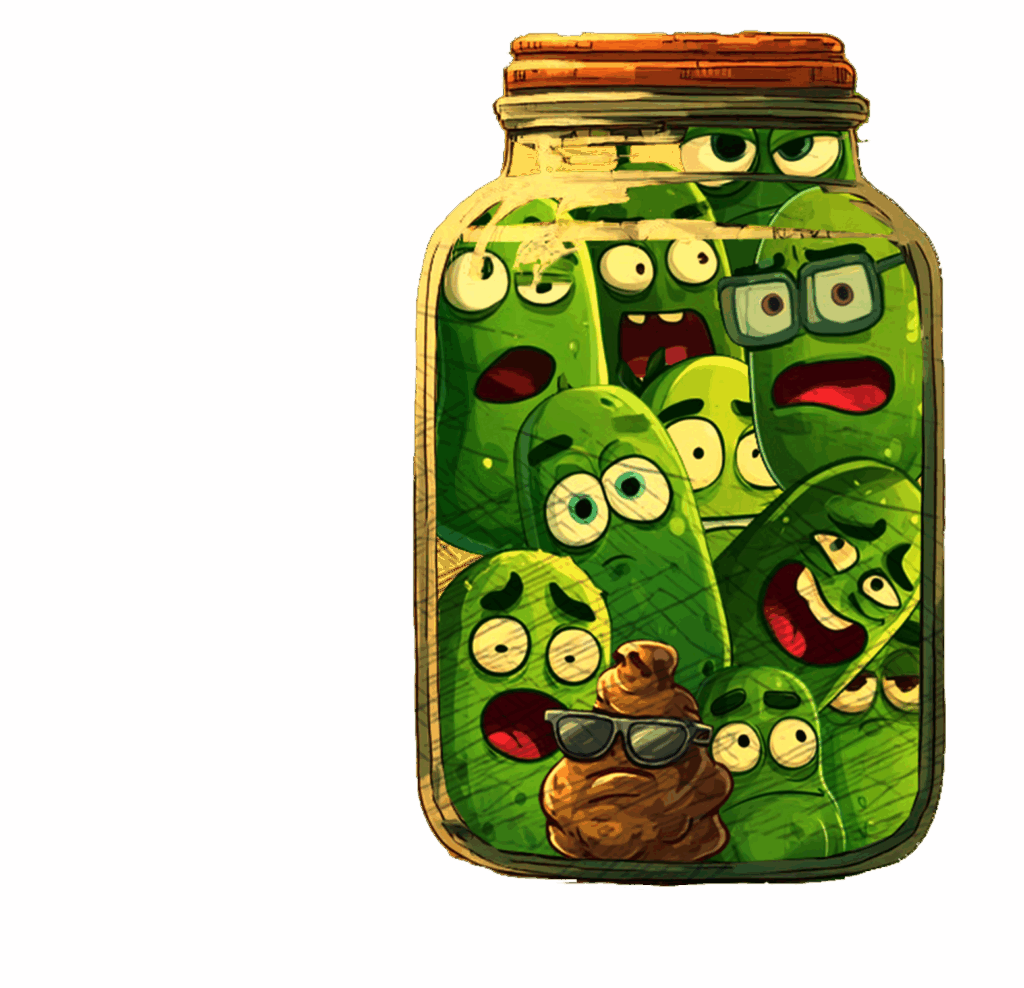
The whole situation still makes me extremely ANGRY as it was such a confluence of random events that came together and created an unnecessarily tragic outcome. However, to this day, I do blame myself for leaving my parents unattended to for that brief moment and allowing this to happen on my watch. As well, I have often wondered if Texas Tech ever added street lights to that campus neighborhood or shut down the ‘crack house’ as that neighborhood clearly is a strategic site for overflow parking on game days.
[1]Disclaimer: This excerpt and corresponding writing sample display some color but the actual book is in black and white.

Anger
Excerpt Setting: UO Campus (Eugene, OR, 1975)
This excerpt was taken from a time when I was returning to the University of Oregon (UO) for my sophomore-year, preparing to move into my fraternity, continue my pre-medicine studies and rejoin the Varsity Men’s Tennis Team. Unfortunately, none of us anticipated the full impact of Title IX, the anti-discriminatory legislation that guaranteed equality between men’s and women’s athletic programs. I was 19-years-old and soon learned that my world as a student athlete was about to change forever, and whereas I fully supported the law, my teammates and I became extremely ANGRY at how poorly our team was treated by the Athletic Department. Imagine working all night cleaning the football and basketball arenas after a game and then heading to class the next morning for midterm exam just to fund the team’s expenses. Enjoy!
Sample #1
Ch. 10 – A Well-Educated Janitor[1]
I was not prepared for the emergency meeting, called by our tennis coach for the six of us who were returning team members. Immediately, upon entering the room, we were notified that the Men’s Varsity Tennis program, along with the Men’s Varsity Baseball program and potentially other Men’s Varsity programs were in serious jeopardy of being cut immediately from the University due to Title IX. It was common knowledge that, on June 23, 1972, Title IX was amended to the Civil Rights Act of 1964 and signed into law by President Richard Nixon stating, “No person in the United States shall, on the basis of sex, be excluded from participation in, be denied the benefits of, or be subjected to discrimination under any education program or activity receiving federal financial assistance” (U.S. Department of Education, 2025). In other words, although the law was enacted in 1972, it wasn’t until the 1975-76 school year that colleges and universities were mandated to enforce it, or federal funding for that school would be eliminated.
The bottom line here was that men and women had to be offered the same number of Varsity sports, so most thought the UO would simply add more Women’s Varsity sports to equal those of the men. In fact, Women’s Golf was added in 1972, Women’s Basketball was added in 1973 and Women’s Cross Country was added in 1974. However, UO, like many other universities was under tight financial restraints and it soon became apparent that the solution also necessitated eliminating two of the men’s sports, and the likely candidates were Men’s Baseball and Men’s Tennis. Fortunately, we had an incredibly resourceful tennis coach who was not willing to give up without a fight. First, for those six of us who were on an athletic scholarship, as well as the coach’s salary, that money could not be taken away if we met our obligations as a team, competing in the then Pac-8 Conference. Second, if we so chose, we would be given special preference in being paid for work performed cleaning the football stadium and basketball arena after sporting events as well as selling programs and concessions, which of course may sound great until we actually had to do the work. Imagine finishing a three-hour tennis practice on a random Thursday afternoon at 6 pm during Winter term and then heading to Macarthur Court where the Men’s Basketball team played its home games in front of a sold-out arena of 10,000 fans. A few of us would work in a booth by the main entrance passing out programs and the rest of us would staff a concession stand nearby. Then, around 10 pm, when the game ended and the crowd had cleared, it became our responsibility to pull out air blowers, brooms and mops and clean the entire stadium, including the bathrooms, which usually took about ten hours. Of course, if any of us had a midterm at 8:30 am on campus the following morning, we were allowed to leave early, although not to shower, but rather with just enough time to head straight to class smelling of soggy popcorn and stale hot dogs.
All told, I pulled more than forty all-nighters cleaning arenas in my remaining three years which meant that not a moment of that time was ever available for studying. As well, we would raise money by travelling to tennis clubs around Oregon, performing exhibitions and hosting clinics, but at no time were we allowed to solicit funds from university donors, from tennis alumni or anyone else because that might divert money from their higher profile programs. Interestingly, the newly hired Athletic Director created a ‘blue-ribbon’ leadership committee comprised of one representative from each of the varsity women’s and men’s sports who met once a month to discuss important issues. As the Men’s Tennis rep, I did try repeatedly to get any rational explanation from the Athletic Director for his ridiculous decision, but to no avail.
In reflection, it’s hard to believe that I was able to maintain my academic standing with all of the school I missed and all of the professors I had to beg in order to be allowed to make-up missed exams and still find time to compete inter-collegiately. I guess what doesn’t break us, makes us stronger, and it certainly prepared me for sleep deprivation associated with living in a fraternity with seventy other guys, although I would be lying if I didn’t admit that I carried a lot of ANGER toward the Athletic Director for abandoning us. On the other hand, I do respect what Title IX accomplished, especially when I reflect on my sister, Heather’s tennis career at the University of Oregon. As I noted earlier, she played #1 singles and doubles for all four years, and in her Senior year, was the top women’s collegiate tennis player in the Pacific Northwest. However, neither she, nor any of her teammates, ever received athletic scholarships, and to add insult to injury, the women’s team played on the ‘Gawd-awful’ Alder Street cement tennis courts with gaping holes in the tennis nets.
Also, since I always look for the silver-lining in everything, I will admit that when we cleaned the arena on Friday or Saturday nights, we MAY have snuck in some of our favorite libations to help the evening move along more quickly. In fact, one of my fondest memories was the time one of my teammates gained entrance into the unattended press box around 3 am and played Steven Miller’s iconic song, Fly Like an Eagle (Miller & McCarty, 1976), with the lyrics “Time Keeps on Slippin’, Slippin’ Slippin’, Into the Future” blasting at full volume in the deserted arena. This inspired two of my teammates and me to forever label ourselves as ‘Slime Bro’s’(after we changed the lyrics from ‘Time’ to ‘Slime’).
<Chorus 1>
Time keeps on slippin’, slippin, slippin,
Into the future
Time keeps on slippin’, slippin, slippin,
into the future
<Chorus 2>
I want to fly like an eagle, to the sea
Fly like an eagle, let my spirit carry me
I want to fly like an eagle, ‘til I’m free
Oh, Lord, through the revolution.
<Verse 1>
Feed the babies who don’t have enough to eat
Shoe the children, with no shoes on their feet
House to people, livin’ in the street
Oh, oh, there’s a solution.
Interestingly, the song was originally written as a protest against our government’s unfair treatment of Native Americans (Steve Miller Band – Fly Like an Eagle Lyrics, 2025), which is fitting because I always felt that our tennis team was unfairly persecuted by the UO Athletic Department. Also, the solution referenced at the end of <verse 1> is, “To treat others the way you would want to be treated’” also known as the ‘Golden Rule’. Oh, and by the way, considering that 10-12 of us each worked ten hours per session for at least a total of 100 man-hours, we were paid a whopping $250 by the Athletic Department (A.D.) for our efforts. I really believe it is self-evident that Title IX was important and necessary but the way UO treated us was not and for that I present them with a Turd in the Pickle Jar Award[2]. Interestingly, both my brother and I have our pictures hanging in a section of the University’s Sports Hall of Fame, called the Walk of Fame, as a way of honoring our accomplishments, but perhaps we should also create a Hall of Shame and prominently hang the Athletic Director’s picture within to dishonor his!
__________
Miller, S. & McCarty, S. of The Steve Miller Band (1976). “Fly Like an Eagle” [Song]. Fly Like an Eagle [Album]. Capitol Records [Record Label].
Steve Miller Band – Fly Like an Eagle Lyrics (2025) [Website]. Fly Like an Eagle Lyrics. Genius (2025) [Source].
U.S. Department of Education (2025). Title IX and Sex Discrimination [Website]. Title IX [URL].
[1]Disclaimer: This excerpt and corresponding writing sample display some color but the actual book is in black and white.
[2] Inspired by and awarded to those toxic individuals who seem to disrupt the vibe for everyone else at a gathering, after all, it only takes one to ruin it for all! Note that this image uses color whereas the actual memoir is in black and white.
Define Anger
An emotion characterized by tension and hostility arising from frustration, real or imagined injury by another, or perceived injustice. It can manifest itself in behaviors designed to remove the object of the anger (e.g., determined action) or behaviors designed merely to express the emotion (e.g., swearing). Anger is distinct from, but a significant activator of, aggression, which is behavior intended to harm someone or something. Despite their mutually influential relationship, anger is neither necessary nor sufficient for aggression to occur (American Psychological Association, n.d.).
American Psychological Association (n.d.). Anger. APA Dictionary of Psychology. Retrieved from https://dictionary.apa.org/anger.
Manage Anger
Managing anger involves recognizing your triggers, learning to calm yourself down and developing healthy ways to express your feelings:
Understanding Your Anger:
- Identify the triggers: Pay attention to situations, people or thoughts that tend to make you angry;
- Recognize warning signs: Learn to recognize the physical and emotional cues that indicate you’re becoming angry, such as a racing heart, clenched fists or feeling hot;
- Understand the root cause: Explore why you’re feeling angry. Is it a reaction to a specific event, or is it a deeper issue like stress or past trauma?
Managing Anger in the Moment:
- Take a time-out: Physically remove yourself from the situation to calm down;
- Deep breathing: Practice slow, deep breaths to lower your heart rate and calm your body;
- Progressive muscle relaxation: Systematically tense and release different muscle groups to release tension;
- Visualize calmness: Imagine a peaceful scene or situation to help shift your focus away from anger;
- Use humor: Try to find something humorous in the situation to release tension;
- Communicate assertively: Once calm, express your feelings and needs in a clear and respectful way;
- Engage in physical activity: Exercise can help release pent-up energy and reduce anger;
- Journaling: Write down your thoughts and feelings to process them and gain perspective;
Long-Term Strategies:
- Cognitive restructuring: Challenge negative or irrational thoughts that contribute to anger;
- Seek professional help: If anger is overwhelming or persistent, consider therapy or anger management classes;
- Practice relaxation techniques regularly: Make relaxation exercises like deep breathing or meditation part of your daily routine;
- Develop healthy coping mechanisms: Find constructive ways to deal with stress and frustration;
- Practice empathy: Try to understand the other person’s perspective to diffuse conflict;
- Build healthy relationships: Surround yourself with supportive people who can help you manage your emotions;
- Avoid dwelling on negative thoughts: Instead, focus on solutions and positive aspects of the situation (Google, 2025);
Google (2025). AI Overviews [Generative AI Feature]. Managing anger. Retrieved from Managing Anger.
Note that this [URL] link is for a Google AI Overview so the actual content provided on line may differ slightly from the description that is printed above.