Writing Samples
Joy | Sorrow | Attraction | Disgust | Amusement | Anger | Excitement | Anxiety | Pride | Embarrassment | Gratitude | Jealousy
Anxiety
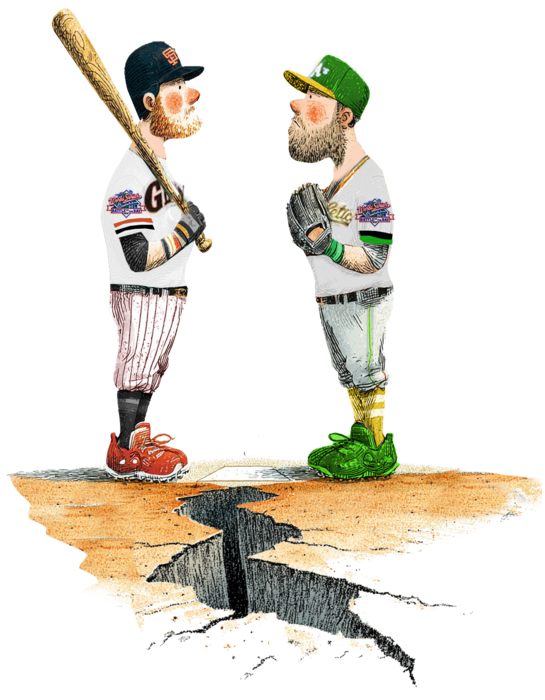
Excerpt Setting: Game 3 of the ‘Bay Area’ World Series, Candlestick Park (San Francisco, CA, 1989)
This excerpt was taken from a time when my brother Rick offered my girlfriend (Ravae) and me two tickets to Game 3 of the 1989 World Series between the two local Bay Area teams, including the Oakland A’s and the San Francisco Giants. We excitedly joined in pre-game celebration with thousands of fans awaiting ‘first pitch’ but as history has revealed, the magnitude 6.9 Loma Prieta Earthquake directly hit San Francisco, including Candlestick Park at precisely 5:04 pm and our joy turned to terror (ANXIETY) in an instant as we rushed to evacuated the stadium. Enjoy!
Sample #2
Ch. 19 (A COOKIE for PUPPY GIRL) – Battle of the Bay[1]
As mid-October (1989) approached, Rick stayed-over one evening and mentioned that he had just secured tickets for the upcoming ‘Bay Area World Series’ between the two local, Major League baseball teams, the Oakland A’s and the San Francisco Giants. Apparently, a surplus of non-claimed tickets was going on sale, either for Games 1, 2, 6 and 7 to be hosted in Oakland or Games 3, 4 and 5 to be hosted in San Francisco. Rick cleverly utilized the administrative staff in the office he worked at, to make ‘robo-calls’, hoping to get connected to the ticket office and purchase a pair of tickets for either venue. Surprisingly, he was eventually successful in this ‘phone lottery’, securing two tickets for the games to be played at San Francisco Giant’s home stadium, Candlestick Park. Rick was going to be out of town on business for Game 3, scheduled for Tuesday, October 17th, so he offered the two tickets to Ravae and me. We were thrilled to attend, so I rearranged my travel schedule and we made plans accordingly. The game, which was being nationally hyped as ‘The Battle of the Bay’, announced first pitch around 5pm so we chose to take a noon shuttle bus from the Larkspur Ferry Building, a stop within walking distance of our home, arriving at the stadium around 2 pm. For the next couple of hours, we wandered the parking lot in awe of the decadent parties underway, including a group of fans hot tubbing in the bed of an enormous pick-up truck. We had brought our pre-game libations but also managed to get invited to a couple of the parties before heading inside the stadium around 4pm. We grabbed a beer and scouted out our seats in the second-row overhang, in foul territory down the third-base line, on the top deck. The weather was still very warm outside and the energy was tremendously electric, with the public address (PA) system playing loud music as the teams prepared for first-pitch at 5:35 pm, as history unfolded when, “The 1989 Loma Prieta earthquake, magnitude 6.9, struck the region at 5:04 pm, marking the first major earthquake to be broadcast on live-television” (“1989 Loma Prieta Earthquake”, 2026).
When it hit, things got very weird. We heard a low roar off in the distance that seemed to be coming toward us (from the south), as the sound intensified. At first, I thought it might be due to the F-18 jets scheduled for a fly-over but that wasn’t supposed to happen for another 15 minutes. Suddenly, the whole stadium began to sway, as the massive expanse of concrete began to roll back and forth in a rhythmically uniform manner, almost like rocking a baby to sleep. It appeared as though we were moving about three-feet (off-center) in either direction, although the experience was absolutely surreal and spellbinding. When the motion subsided, at first the stadium went deathly silent, but then a slow roar rose from the crowd, followed by loud cheers as exhilarated fans were high-fiving each other in anticipation of the game. I knew something very bad had just transpired, although the PA system was no longer broadcasting and in that ‘pre-cell phone’ era, no one knew exactly what. I recall that my next ‘wild speculation’ imagined that maybe a large jet from nearby SFO airport had crashed into the stadium. As we sat there, still dazed and confused, Ravae was laughing and teasing me for being so uptight, at which point she offered to grab us another beer at the concession stand, and eventually I caught up to her, both of us still oblivious to the extent of damage around us. After a few minutes, I saw some guy walk by us with a chunk of cement about the size of a soccer ball, bragging that it had almost struck him when it fell from the expansion joint above his seat and I was further unnerved, wondering if the stadium was now unsafe. At the same time, another guy with a transistor radio reported that part of the Bay Bridge had collapsed, the same bridge that Dad and I had crossed on my initial relocation to San Francisco three years prior. I was imagining cars being hurled off the bridge to the chilly waters, 190-feet below, which was fortunately not the case. At that point, the concession stand was shuttered as I grabbed Ravae’s hand and insisted that we get the hell out of Candlestick Park immediately, which we did, although she still thought I was totally over-reacting.
Interestingly, “Experts credit the timing of the World Series as a lucky break that prevented massive loss of life in the region; key in reducing the loss of life was the fact that many people on both sides of the bay had left work early or were staying late to participate in after-work group viewings, and parties, reducing the traffic that would otherwise have been on the collapsed freeways at 5:04 pm on a Tuesday” (“1989 Loma Prieta Earthquake”, 2026). Of note, 42 people died in the collapse of the Cypress Street Viaduct (Hwy 880) in Oakland when the top deck ‘pancaked’ on to the lower deck, crushing those below. Chillingly, both my brother, Rick and I had driven that stretch several hundred times prior as a part of our daily work commute, and I can honestly say that when the traffic is stopped, hundreds and hundreds and hundreds of cars would have been in harm’s way had the area not been virtually clear. In fact, as I noted prior, Rick had offered the tickets to us because he was working out of town that day, in Seattle, and upon returning home shortly before the game, his flight had landed in Oakland, uncharacteristically, 35 minutes early, at which time he rushed toward home to watch the game, driving through that stretch of the Viaduct, on the lower deck, about thirty minutes before it collapsed.
Ravae and I found our shuttle bus but it took more than seven hours to return home because many of the freeways and bridges were closed for inspection, including the Golden Gate Bridge that brought us back to our apartment in Marin County. As well, the neighborhoods around Candlestick Park, referred to as Hunter’s Point, were always known to be ‘sketchy’, but on this particular night, so many vehicles were stranded on the streets there, with no place to exit, that many of the passengers were being robbed by looters, at gunpoint. Fortunately, our bus driver kept us safely locked inside and avoiding a potentially ‘worst-case scenario!’ As well, we were fortunate to still have a pint of warm vodka for the long ride home that I just remembered that I had hidden in my sock for the pre-game celebration. However, that excitement was short-lived when I later realized the bus had no bathrooms, forcing me to improvise and ultimately sacrifice my brand-new Nike tennis shoes which were put into service for other purposes, and eventually discarded, as I walked home barefoot.
In reflection, it was an extremely stressful (ANXIETY) evening, but considering the outcome, I am thankful, to this day, that Rick, Ravae and I walked away totally unscathed. For what it is worth, the game was rescheduled for 10-days later, on Friday, October 27th, and Ravae and I did attend, but it was no longer about the game, or sports, in general, but rather a celebration of life and acknowledging the profound loss for those less fortunate.
Interestingly, I did learn that our fair city has a theme song, written in 1936, and often performed by legendary Tommy Dorsey and his large orchestral bands so typical of that pre-World War II era. In fact, the talented cast of ‘Beach Blanket Babylon’, a long-running, local theatrical-production located at Club Fugazi in North Beach performed the ‘Theme of San Francisco’ (Kahn, 1936) just prior to first-pitch at the rescheduled Game 3 of the World Series.
It only takes a tiny corner of
This great big world to make a place you love
My home up on the hill
I find I love you still
I’ve been away but now I’m back to tell you.
San Francisco
Open your golden gate
You let no stranger wait outside your door.
San Francisco
Here is your wandering one
Saying I’ll wander no more.
Other places make me love you best
Tell me you’re the heart of all the golden west.
San Francisco
Welcome me home again
To go roaming no more.
Perhaps the reader recognizes the iconic lyrics, ‘San Francisco, open your golden gate, you let no stranger wait outside your door’. It was a rousing rendition and a heart-felt tribute to the occasion. As well, their iconic production was a must-see for visitors to SF, lasting for more than fifty years before it was shuttered, unfortunately, due to COVID.
“1989 Loma Prieta Earthquake” (2026, January 17). In Wikipedia. Retrieved from 1989 Loma Prieta Earthquake [URL].
[1]Disclaimer: This excerpt and corresponding writing sample display some color but the actual book is in black and white.
Anxiety
Excerpt Setting: Daniel Field Airport, 15 miles north of UO (Harrisburg, OR, 1975)
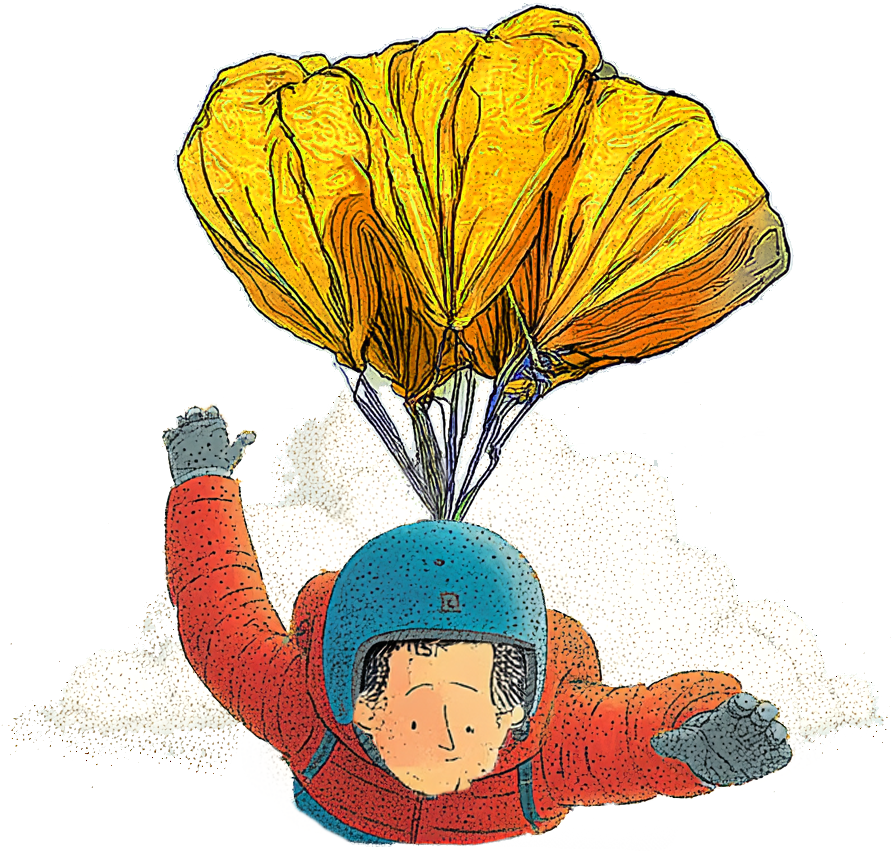
This excerpt was taken from my freshman-year at University of Oregon as my judgement may have been clouded by a young woman who convinced me to enroll in a PE class Spring term that would teach us how to skydive. It might be worth noting that as a 19-year-old, I had never been in an airplane but I did know that I was deathly afraid (ANXIETY) of heights. However, I wasn’t overly concerned as I never thought we would actually attempt such insanity until we did. So, when the flight instructor slid the side door open at 2,800 feet (altitude) and the wind, whipping at 110 mph, hit me directly in the face, what could possibly go wrong here? Enjoy!
Sample # 1
Ch. 7 (A TURD in THE PICKLE JAR) – Please Don’t Make Me Jump[1]
I had just returned home from Spring Break in the San Francisco (SF) Bay area competing with the Men’s Tennis team and I was making final changes to my class schedule prior to registration in the morning. Our fraternity was having a back to school ‘tacos and tequila’ party with girls visiting from a favored sorority, when one of my friends mentioned that he would be signing up for a P.E. class to learn how to skydive. It might be worth mentioning that at this point in my young life of 19 years, I had never even been in an airplane and was deathly afraid of heights, and, by-the-way, I still am. However, when the fun-loving girl that I was dating at the time strongly suggested that we join in, I whole-heartedly chimed in, “Sounds like fun”. Of course, one may wonder if the tequila influenced my decision, because certainly the fact that my athletic (tennis) scholarship, subject to immediate revocation for participating in any reckless activities did NOT! Needless to say, I really liked that girl so we enrolled in the class together and it was great fun practicing our jumps into a pit filled with foam pads from a three-foot-high ledge. In fact, it reminded me of the famous ‘ball pits’ at the McDonalds’ Play Places. However, it clearly didn’t adequately prepare us for crawling out on a Cessna-182 wing strut at 110 mph and 2,800 feet above the ground. By the way, this particular experience is not at all similar to the current day promotions where you can pay to jump out of a plane tethered to the front of a professional jumper who handles every aspect from packing the chute, positioning inside of the plane, maneuvering outside of the plane, pulling the rip cord, steering the descent with the wind panels, landing safely and gathering the deployed chute. I guess, the good news is that I was tethered to the airplane with an eight-foot static-line cable attached to the rip cord so if I blacked out, at least the chute would open and I would fall unconsciously to the ground. On the other hand, if for any reason the chute does not open properly, it is hard to imagine having the presence of mind to cut that defective chute free and pulling the emergency chute attached to my waist area, while tumbling out of control toward earth at a terminal velocity of 120 mph. By the way, while falling at this rate, a jumper has less than 20 seconds to successfully complete all of these life-saving tasks before splattering on the ground below.
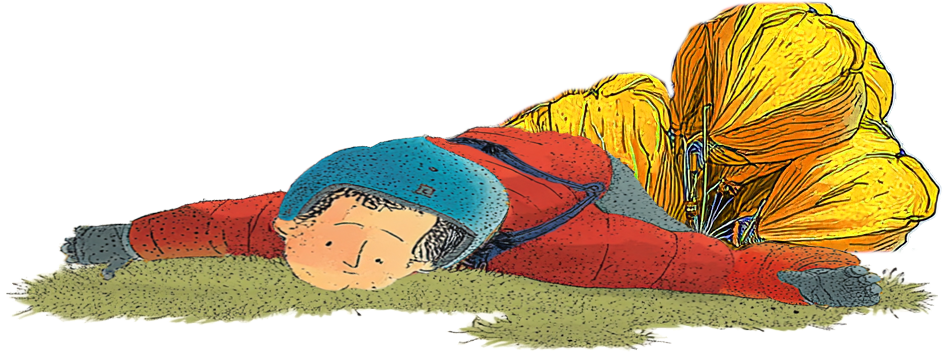
Eventually our men’s tennis season ended, which meant the dreaded skydiving plans were back in focus as we completed our basic training and ventured out to the small airstrip north of Eugene. When it was our turn, we suited up and three of us, along with the pilot and jump-master loaded into the very old and cramped airplane. The plane took off down a dirt runway filled with ruts and potholes, lifted off of the ground and for a brief moment, I was exhilarated to be on my maiden voyage into the air above. Presently, we reached the desired 2,800 feet, knowing that the law required a chute to be deployed no lower than 2,500 feet and that we would fall 300 feet once the rip cord automatically pulled shortly after exiting the plane. However, I was not prepared when the flight instructor slid the side door open and the wind, whipping at 110 mph, hit me directly in the face. He ordered me to swing my body around to face the outside, place my feet on a steel rod extending from the side of the plane and then lean forward until I could reach the strut extending to the wing with cumbersome packs on both my back (holding the main chute) and my stomach (holding my emergency chute). A feeling of sheer terror overwhelmed my senses, and I froze for about sixty seconds, at which time the door was re-closed and the pilot indicated that we had missed our ‘jump window’, based on where we were supposed to land considering the prevailing wind conditions. In the next three minutes as the pilot circled the plane into position again, the flight instructor explained that if I did not jump, then nobody would be allowed to because the small plane was so cramped that there would be no way for the other two skydivers, including my girlfriend, to maneuver past me to the exit. That said, it would be safe to say that I have never felt peer pressure that intensely in my life when I caught a glimpse of that ‘stink eye’ look my girlfriend directed my way. Not surprisingly, I did jump out of the plane and it was one of the most exhilarating two-and-a-half-minute descent, although I was so distracted that I forgot to steer the chute toward the jump zone target and ended up landing in a ditch less than 20 feet away from the south bound lane of the Interstate-5 freeway which runs from Canada to the Mexican border. Fortunately, most of the trucks and automobiles had slowed to a crawl in anticipation of our incompetence.
In reflection, the ANXIETY I experienced in that plane is almost indescribable, knowing that I had to literally accept the premise that I might die in the next thirty seconds before I was able to release my death grip on that wing strut. As well, I hadn’t told my parents about my jump until afterward as I knew they would worry, but I still recall Mom asking, “Why would anyone be stupid enough to jump out of a perfectly good airplane”, to which I embarrassingly replied, “Mom, I did it for a girl”. Fortunately, that young woman did forgive me for creating so much chaos in the plane prior to our jump, especially when I presented her with a lyrical rendition of John Denver’s classic song, ‘Leaving on a Jet Plane’ (Denver, 1967) which I changed to, ‘Leaping from a Prop Plane’.
My chute is packed
Crouched on the floor
Jump-master just opened the door
I’m so scared to jump that I could cry
But the wind is howlin’
Unable to hear
The plane is stallin’
It’s out of gear
Already I’m so frightened
I could die.
So, hug me and pray for me
Tell me you’ll hold on to me
Promise me that I don’t have to go
‘Cause I’m leapin’ from a prop plane
Don’t know if I’ll survive the fall
Oh’ babe, don’t make me go.
I created the lyrics in about twenty minutes in my head on the drive back to campus after our skydiving adventure and sang it to her that evening. I guess she appreciated that I could laugh at my own insecurities, including my profound inability to carry a tune so it’s probably a good thing that I only wrote one verse.
Denver, J. (1967). “Leaving on a Jet Plane” [Song]. Rhymes & Reasons [Album]. RCA Records [Record Label].
[1]Disclaimer: This excerpt and corresponding writing sample display some color but the actual book is in black and white.
Define Anxiety
An emotion characterized by apprehension and somatic symptoms of tension in which an individual anticipates impending danger, catastrophe, or misfortune. The body often mobilizes itself to meet the perceived threat: Muscles become tense, breathing is faster, and the heart beats more rapidly. Anxiety may be distinguished from fear both conceptually and physiologically, although the two terms are often used interchangeably. Anxiety is considered a future-oriented, long-acting response broadly focused on a diffuse threat, whereas fear is an appropriate, present-oriented, and short-lived response to a clearly identifiable and specific threat (American Psychological Association, n.d.).
American Psychological Association (n.d.). Anxiety. APA Dictionary of Psychology. Retrieved from https://dictionary.apa.org/anxiety.
Manage Anxiety
Managing anxiety involves a combination of lifestyle adjustments, relaxation techniques, and, in some cases, professional help.
Lifestyle Adjustments:
- Exercise: Regular physical activity, even light exercise like walking can significantly reduce anxiety symptoms by releasing endorphins and balancing brain chemicals;
- Healthy Diet: A balanced diet can improve mood and reduce anxiety. Consider reducing or eliminating caffeine and alcohol, as these can worsen anxiety symptoms;
- Adequate Sleep: Prioritize getting enough sleep as sleep deprivation can exacerbate anxiety;
- Limit Screen Time: Excessive screen time, especially before bed, can negatively impact sleep and contribute to anxiety;
- Mindful Activities: Engage in activities that help you relax and focus on the present moment, such as reading, listening to music or spending time in nature;
Relaxation Techniques:
- Deep Breathing: Practice deep, slow breaths to calm your nervous system and reduce physical symptoms of anxiety;
- Mindfulness Meditation: Focus on the present moment without judgment, which can help quiet racing thoughts and reduce anxiety;
- Progressive Muscle Relaxation: Tense and release different muscle groups to release physical tension associated with anxiety;
- Guided Imagery: Visualize calming scenes to help reduce anxiety and promote relaxation;
Professional Help:
- Therapy: Cognitive Behavioral Therapy (CBT) and other forms of therapy can help you identify and change negative thought patterns and develop coping mechanisms;
- Medication: In some cases, mediation may be prescribed by a doctor to help manage anxiety symptoms, but this is usually in conjunction with therapy;
Seeking Support:
- Talk to Loved Ones: Share your experiences with trusted friends or family members;
- Join a Support Group: Connect with others who understand what you’re going through in a support group setting;
- Consult with a Mental Health Professional: A therapist can provide guidance and support in developing a personalized anxiety management plan;
Additional Tips:
- Identify Triggers: Try to identify what situations, thoughts or feelings trigger your anxiety to better prepare yourself;
- Challenge Negative Thoughts: Practice reframing negative thoughts into more positive and realistic ones;
- Set Realistic Goals: Avoid overwhelming yourself by setting small, achievable goals;
- Be Patient with Yourself: Managing anxiety takes time and effort. Be patients and kind to yourself throughout the process (Google, 2025);
Google (2025). AI Overviews [Generative AI Feature]. Managing anxiety. Retrieved from Managing Anxiety.
Note that this [URL] link is for a Google AI Overview so the actual content provided on line may differ slightly from the description that is printed above.