Writing Samples
Joy | Sorrow | Attraction | Disgust | Amusement | Anger | Excitement | Anxiety | Pride | Embarrassment | Gratitude | Jealousy
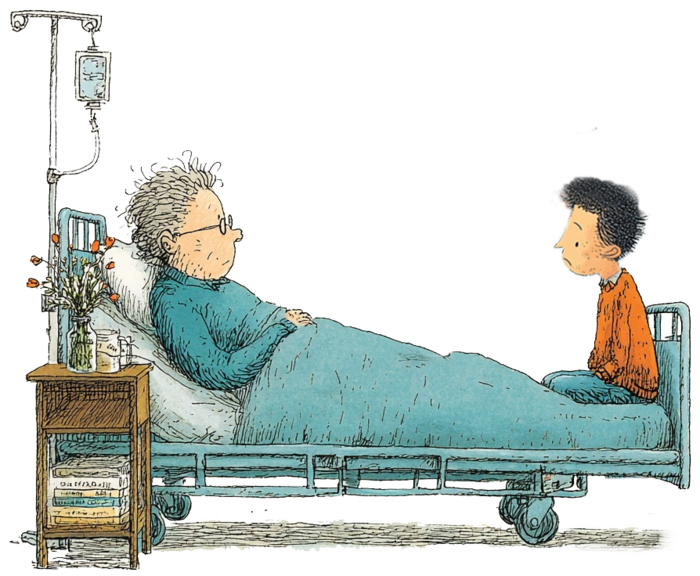
Sorrow
Excerpt Setting: Elderly Nursing Home (Roseburg, OR, 1965-71)
This excerpt was taken during my childhood, growing up in southern Oregon, at which time I would frequently visit my great Aunt Martha (i.e., my maternal grandfather’s sister) in an elder-care nursing home. Martha was highly educated, and as a single woman, lived a remarkably exciting life, traveling the world in the early 1900’s before being diagnosed with an aggressive form of Multiple Sclerosis. As a result, she relocated (from Seattle) to our home town to be near her brother, but when he passed away in 1967, Martha lived out her remaining years mostly alone and in considerable pain. Others visited on occasion, but she and I formed a special bond as I visited almost daily, no doubt helping her to escape the realities of her miserable and SORROWFUL Enjoy!
Sample #2
Ch. 4 (A COOKIE for PUPPY GIRL) – Another Merciless Casualty of MS[1]
My love affair with Triton Bioscience continued as one afternoon, in early September, my boss called me into his office for my first performance evaluation upon completing my ninety-day probationary period. Of course, I received comprehensive feedback, both positive and negative, but overall, it went really well. However, the most significant outcome from that meeting was learning that Triton was ready to start a phase III program in Multiple Sclerosis (MS), having determined that there were compelling scientific reasons to believe that our lead compound, Betaseron might be effective in slowing disease progression. Our company had been conducting a small phase I trial at three investigational sites in the U.S., and based on preliminary results, the program was being ‘fast-tracked’, which signified top priority, and I was being assigned to build the database and support the clinical team as necessary to reach a corporate goal of ‘first patient enrolled’ into the new study by the end of the year (1986). That certainly was an aggressive ‘stretch-goal’ but served as enough motivation for me to work twelve-hour days over the next several weeks to do my part, and I did just that.
I also had a more personal motivation for desperately wanting to participate in the MS program because my great Aunt Martha protracted MS and as a child, I witnessed the insidious (slow) disease progression consume the remainder of her life. Martha was one of my (maternal) grandfather’s older sisters, and lived a colorful life, especially for a young woman born in the 1890’s. She attended the University of Washington and then went on to earn a graduate degree from UC Berkeley before teaching high school in Seattle for a good share of her life. Martha retired in the late 1950’s and moved to Roseburg to be near her brother (Edwin) and her sister (Hazel) and I can still remember visiting her at her home near our grandparents in the early 1960s. Mom would drop me off for lunch and Martha would let me sit in her rocking chair for hours as she would share adventurous stories of her exotic travels all around the world which still seems remarkable for a single woman in the early part of the twentieth century. Unfortunately, Martha was diagnosed with MS around 1965 and soon had to sell her home and move into an elder care facility in town. Of course, the facilities have dramatically improved over the years, at least for those who can afford the care, but at that time, many were simply awful. I would visit regularly, and I can still remember the horrific smells, that can only be described as a combination of urine, feces, mold and a little ammonia sprinkled in, which I have always equated with the smell of death. Not surprisingly, Martha became very bitter about her circumstances, and after her brother (Grandfather) died in 1967, it became more of a burden for Grandmother and Mom to visit her, especially as she was always so unpleasant. However, nothing deterred me from visiting because we built a great relationship in which I was always eager to share what was happening in my life and I could see her hang on every word, being equally trapped in her non-functioning body and that hell-hole of a patient room. It always amazed me that the revolving-door of hired-then-fired nursing aids would stop by the room and speak to Martha as if she were a four-year-old child, often scolding her if she had an accident due to her MS-induced incontinence (i.e., loss of bladder control). In fact, I feel compelled to offer up a Turd in the Pickle Jar Award, not only to the discourteous staff at her elder-care facility, but also to all those who fail to live up to the expectations of providing care to patients in dire need of it. Over the years, her mood worsened and as I watched her life disintegrate, she actually whispered to me months before she mercifully died that, “Maybe you can help cure this horrible disease one day”.
In reflection, I am still overwhelmed with SORROW for those whose lives are cut short by disease, but especially the neurodegenerative disorders like Multiple Sclerosis, Parkinson’s Disease, Amyotrophic Lateral Sclerosis (ALS), Huntington’s Chorea, and of course, Alzheimer’s Dementia. For me, the insidious progression toward death while an individual’s mental capacity remains intact has to be the worst torture imaginable. So, yes, I had a personal motivation for contributing to the scientific and medical discovery in any small way possible. As well, I am grateful for the years that Martha and I shared together, in spite of the dire circumstances. She loved when I would share my life with her, as I imagine I represented one of her few connections to the outside world up until she passed in 1971.
As an additional follow-up, I would be remiss if I didn’t also paint the entire picture of my Aunt Martha’s life in those final years. As I learned years later, Aunt Martha was very sad and depressed by her life circumstances, especially when she learned that the MS would keep her in that nursing home until she passed on. Not surprisingly, she became very angry and bitter so that when anyone would come to visit her in the nursing home, she would constantly complain, not only about her life, but she was also very critical of her friends and family members who were just trying to support her. I do understand that we will all likely face overwhelming sadness and despair at some point in our lives, but I also believe that it is important to show grace toward those trying to help you, even when we are at our worst. On the other hand, MS can damage brain tissue, directly causing personality changes, including increased anger, irritability and ‘mean’ behavior, often stemming from lesions on the nerve pathways that regulate emotion. In fact, up until presenting with MS, Martha had always been very pleasant and fun to be around. In any case, all I really know is that the whole situation was very sad and under the circumstances, it is not surprising that I ended up being one of Aunt Martha’s favorite (and only) visitors because I somehow tapped into her kinder side and helped her find joy.
For those who might be interested to know, the Multiple Sclerosis Project turned out to be one of those exceptional cases in which an investigational study drug survives the rigors of clinical trials testing over many years and is approved by the FDA. In point of fact, Betaseron was first approved for the treatment of relapsing-remitting Multiple Sclerosis(RRMS) on July 29,1993. Prior to that, Triton Biosciences had been acquired by Berlex Laboratories, a New Jersey-based pharmaceutical company in 1991, who then completed the work that we had started years earlier. I am just sorry that Aunt Martha was not alive to benefit from the treatment, but I know she would have been proud of my efforts.
[1]Disclaimer: This excerpt and corresponding writing sample display some color but the actual book is in black and white.
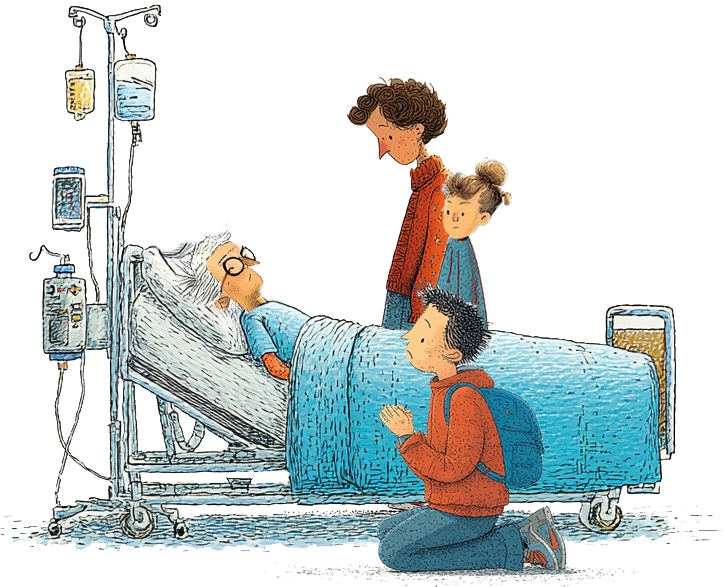
Sorrow
Excerpt Setting: Hospital ICU (Roseburg, OR, 1975)
This excerpt was taken just after my father had been hospitalized emergently for a severe stroke during the summer following my freshman-year of college at 19-years of age. Fortunately, I was still in town and was able to help out initially but intense SORROW began to set in as I had to wrestle with the thought that he ming not survive a follow-on stroke. I alse realized that it was a life-changing event that would require years of therapy just to learn how to walk, talk and perform even the simplest of tasks again, let alone to resume his esteemed career as a high school English Literature instructor. However, the real challenge wwas coming to terms with my crisis of faith. Enjoy!
Sample #1
Ch. 9 (A TURD in THE PICKLE JAR) – Bargaining With God[1]
Sadly, shortly before the summer ended, Dad had a severe stroke (i.e., cerebrovascular accident) that came very unexpectedly, when he collapsed to the kitchen floor in late August. He was only 51-years old at the time, and was very fit, although he had been a (cigarette) smoker since World War II, which likely contributed to his medical event. The ambulance arrived and transported him to the emergency room of our local hospital and it was ‘touch-and-go’ over the next day as medical experts will generally indicate that the likelihood of having a follow-on stroke increases significantly, and since the body is already weakened, the second one is often lethal. There was no doubt that Dad fully understood his condition and not surprisingly, he was making a supreme effort to downplay the severity of the situation. In fact, I still recall that first afternoon, just after my brother, Rick, had arrived in town and we were all sitting around his bed in the Intensive Care Unit (ICU) when Dad’s Neurologist walked into the room. The doctor indicated that Dad would be taken to the X-ray department for a brain scan, and Dad immediately started teasing Rick that he needed to sit in on the procedure to confirm that Dad’s head wasn’t empty. His attempt to lighten the mood was truly indicative of who he was under pressure and probably helps explain how he survived the horrors of war, including his own three bullet wounds in combat.
In full disclosure, it was the first time as a young adult that I had to face the reality of losing Dad, and I was really struggling with my emotions. I said a lot of prayers, in private, bartering for his life to be spared, and it probably was the first time that I actually questioned my own Protestant beliefs in God. I realized that my irrational brain was trying to figure out a way to take control of the situation but my rational brain knew that my dad’s fate was out of our control, so the end result was complete and utter helplessness. In retrospect, Dad did survive the scare, as our family carried out an around-the-clock vigil for his 10-day stay at the hospital so that he would never be alone.
However, Dad’s lengthy career as an English Literature instructor in a nearby high school came to a crossroads because he was not capable of working. Instead, he was focusing all of his time relearning how to walk again, talk again and how to perform some of the most basic tasks like using silverware to eat, brushing his teeth and so on. Clearly, the dynamic in our family changed forever with his stroke as Mom provided unwavering physical and emotional support as he progressed through months of difficult and challenging physical therapy, speech therapy and occupational therapy. Fortunately, Dad had never missed a single day of work in 17 years of teaching so he had accumulated a massive amount of sick leave. So, the school district was kind enough to give him a one-year sabbatical that would be paid for in exchange for his earned sick leave, after which time, a decision would be made as to whether he could continue teaching again. In addition, Mom was allowed to step into Dad’s job, signing a one-year contract, having earned her teaching credentials years earlier, but always choosing to work as a substitute teacher so she could be home as necessary to raise the five of us children. As well, my little sister, Pamela, who was only ten-years-old at the time, grew up very quickly that year, with the rest of us living out-of-town and Mom working full-time and Dad needing a lot of support just to handle basic tasks around the house. Pamela also helped out with the cooking, cleaning and support for Grandmother who was still living alone but becoming more dependent on our family.
In reflection, I give our family a lot of credit for pulling together in a crisis, as we adjusted to our new world and made the best of it, but at the end of the day, we were all profoundly sad (SORROW). Dad worked his ass off in therapy, showing some of that toughness that undoubtedly helped him survive World War II, and he remained optimistic that he would return to his job the following year. Of course, Mom performed her ‘Super Woman’ role that she demonstrated her entire life, keeping the family moving forward, and the rest of us did all we could. It certainly was a challenge when Mom, Dad and Pamela would come up to Eugene for all of the UO sporting events, especially the football games, but we would throw Dad in a wheelchair and roll him into the stadium for another arousing game by our beloved team. Yes, this definitely was a crossroads in our family’s life and we could only hope for the best possible outcome.
[1]Disclaimer: This excerpt and corresponding writing sample display some color but the actual book is in black and white.
Define Sorrow
An emotional state of unhappiness, ranging in intensity from mild to extreme, and is usually triggered by the loss of something highly valued. It’s often associated with the feeling of deep distress, sadness or regret, particularly in response to loss. While sorrow is a form of sadness, it can be more intense and prolonged, sometimes described as a more significant and endurance sadness”
- Emotional State: Sorrow is a subjective emotional experience;
- Loss or Regret: It’s typically a response to a significant loss, whether it be a loved one, a cherished possession or a valued relationship;
- Intensity: Sorrow can range in intensity from mild sadness to deep, profound grief;
- Duration: While sadness can be fleeting, sorrow often implies a more sustained or long-lasting emotional state;
- Resignation: Sorrow, unlike unhappiness, may also carry a sense of resignation to the loss;
- Synonym for Grief: In some contexts, sorrow is used as a synonym for grief, particularly when referring to the emotional response to a death or other significant loss;
- APA Specifics: The APA Dictionary of Psychology emphasizes that persistent sadness is characteristic of a major depressive episode, with anhedonia (loss of pleasure) being the other defining symptom (Google, 2025).
Google (2025). AI Overviews [Generative AI Feature]. Definition of sorrow. Retrieved from Definition of Sorrow.
Note that this [URL] link is for a Google AI Overview so the actual content provided on line may differ slightly from the description that is printed above.
Manage Sorrow
Managing sorrow involves acknowledging your feelings, seeking support and practicing self-care. Allow yourself to grieve, don’t suppress your emotions, and find healthy ways to express them. Connecting with others, engaging in activities you enjoy, and establishing a routine can also aid in the healing process.
Acknowledge and Accept Your Feelings:
- Don’t suppress your emotions: It’s crucial to allow yourself to feel the sadness, grief or other emotions associated with your sorrow;
- Understand that grief is a natural process: It’s a response to loss, and everyone experiences it differently;
- Be kind to yourself: Treat yourself with the same compassion you would offer a friend going through a difficult time;
Seek Support:
- Talk to someone you trust: Sharing your feelings with a friend, family member or therapist can be incredibly helpful;
- Consider grief support groups: Connecting with others who have experienced similar losses can provide a sense of community and understanding;
- Don’t isolate yourself: While alone time is important, avoid completely withdrawing from social interaction;
Practice Self-Care:
- Prioritize your physical health: Get enough sleep, eat nutritious meals and engage in regular exercise;
- Engage in activities you enjoy: Re-engage with hobbies, spend time in nature or pursue activities that bring you joy;
- Establish a routine: Creating a sense of normalcy can be comforting during periods of grief;
- Consider professional help: If grief is overwhelming or persistent, seeking therapy or counseling can provide valuable support;
Find Healthy Outlets:
- Journaling: Writing down your thoughts and feelings can be a cathartic way to process emotions;
- Creative expression: Engage in activities like painting, music or writing to express yourself.
- Mindfulness and meditation: These practices can help you become more aware of your emotions and manage them effectively;
Be Patient and Kind to Yourself:
- Healing takes time: There is no set timeline for grieving, so be patient with yourself throughout the process;
- Focus on the positive: Remember positive memories and moments, and try to find reasons to be grateful;
- Celebrate small victories: Acknowledge and appreciate any progress you make, no matter how small (Google, 2025);
Google (2025). AI Overviews [Generative AI Feature]. Managing sorrow. Retrieved from Managing Sorrow.
Note that this [URL] link is for a Google AI Overview so the actual content provided on line may differ slightly from the description that is printed above.