Writing Samples
Joy | Sorrow | Attraction | Disgust | Amusement | Anger | Excitement | Anxiety | Pride | Embarrassment | Gratitude | Jealousy
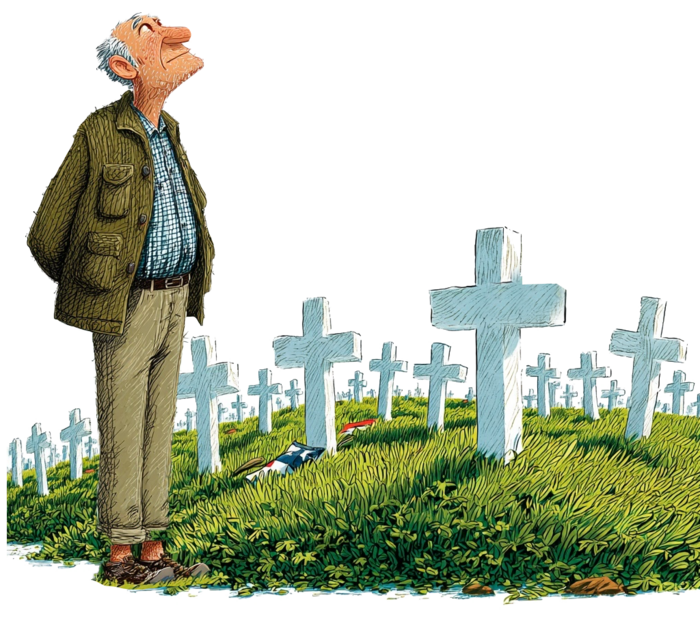
Pride
Excerpt Setting: Normandy 50th Year Anniversary (France, 1994)
This excerpt was taken in the Spring of 1994 when my brother, Rick and I accompanied Mother and Father on a trip to Europe, primarily to visit the Normandy region of France where my dad had come ashore at Utah Beach on D-Day, June 6, 1944 as a part of the Allied Invasion during World War II. Dad served as a member of General George Patton’s famed Third Army, fighting on the extreme front lines as a mortar gunner in five separate Battle Campaigns in the European Theatre until the Allied Forces defeated Hitler and the Nazi regime in Europe. It was an honor (PRIDE) to share this experience with my family and it is my honor to share our storied return 50 years later with you, the reader. Unfortunately, Dad suffered from crippling PTSD that led my mother to claim that part of him never returned home following the war. Please salute our brave and fallen heroes, and in the immortal words of Rudyard Kipling poem, ‘Recessional’, “Lest we forget – Lest we forget”. Enjoy!
Sample #3
Ch. 32 (A COOKIE for PUPPY GIRL) – A Trip of a Lifetime[1]
We booked our European excursion with University Travel Agency and excitedly discovered an agenda that was ideally suited for us. The four of us flew to Paris and stayed in the iconic Grand Hotel du Palais Royal, located adjacent to the Opera House downtown. There were no events scheduled on our first afternoon so we took the opportunity to attend the French Open, one of the four Grand Slam events worldwide and played on the storied red-clay at Roland Garros Tennis Center. That evening, we met up with our tour group for a welcome banquet and spent the next three days visiting many of the most popular destinations around town, including the Eiffel Tower, Arc de Triomphe, Champs-Elysees, Moulin Rouge, Notre Dame Cathedral, the Louvre & D’Orsay Museums, Montmartre’s artist village, Sacre-Coeur, Napoleon’s Tomb and Palace of Versailles. The schedule was exhausting so after we put Mom and Dad to bed each evening, Rick and I could enjoy the nightlife around town starting with the legendary ‘Harry’s New York Bar’ located just next door.
On the fourth morning, we boarded a luxury river cruise ship, moored in the shadow of the Eiffel Tower, for a four-day trip down the Seine River (northward) toward Normandy. Almost immediately we were all summoned to the ship’s deck for lunch and were rewarded with a fascinating lecture by a visiting college art literature professor who reviewed the life and work of French Impressionist Claude Monet and by early afternoon we were docking at Giverny to visit his famous water-lily gardens where many of his inspired paintings were created. During the following morning brunch, another visiting lecturer prepared us for the dramatic ruins of Chateau Gaillard, home of the 12th century King of England, Richard the Lionheart’s medieval fortress when the Normandy region was controlled by the English. Later, in the afternoon, over cocktails we discussed the Hundred Year War, focusing on the heroic work of Joan of Arc before we visited the site where she was burned at the stake in Rouen for challenging the English’ 15th century-claim to the French throne. The following day, the lectures transitioned to World War II as we approached Le Havre, a German stronghold prior to D-Day (1944), accompanied by a visit to several massive World War II museums in the Normandy region, commemorating the collective war effort of the British, French, Canadians and Americans in the region. Of course, the main purpose of our trip was to visit Utah Beach in Normandy, where Dad came ashore, so we broke away from our group for the day, rented a car and drove straight to the Beach. Clearly, my father was fortunate that Utah Beach did not endure the same intense fighting coming ashore as experienced on ‘bloody’ Omaha Beach, but they did come under heavy fire that evening as they slowly pushed inland.
It was a surreal experience as we passed nearby to a bombed-out church located in the hedgerows a few miles inland and Dad suddenly became animated as he gasped, “See that church over there, we were pinned down that first night by snipers and two of my buddies took bullets from those German bastards!” The trip suddenly got very real and my dad’s mood became very erratic, alternating between bouts of excitement and then rage, before he got very quiet for the remainder of our visit to Utah Beach. From there we visited Omaha Beach as well as the Normandy American Cemetery at Colleville-sur-Mer, overlooking Omaha Beach and commemorating the 9,387 American soldiers buried there. I can honestly say that walking through the burial site and standing before the ‘Wall of the Missing’ remains as one of the most emotional experiences of my life.
The next morning, our tour group took a six-hour ferry ride across the English Channel from Caen (France) to Portsmouth (England), and I think my dad was just as seasick as he was fifty-years earlier, only this time he didn’t have to jump into the icy waters below. That second week in England was still great fun as we were able to experience many of the historical landmarks including Buckingham Palace, Westminster Abbey, St. Paul’s Cathedral and the National Gallery at Trafalgar Square. As well, we broke away from our group for an afternoon to enjoy strawberries and cream on the hallowed Wimbledon Tennis grounds in southwest London, although the Championships were not in session for another month and we even squeezed in a visit with our cousin who lived in the area. However, our major motivation for making the trip was for dad to reconnect with his past in France and we accomplished that goal. As well, mom and dad were exhausted and emotionally-drained from the travel and as I had stated earlier, mom’s dementia tended to flare up when she was tired so we really were looking for every opportunity to slow down the pace. Our final night included a fancy banquet dinner at our famed Winston Churchill Hotel in Portman Square and by the next evening we were safely back in Oregon with a trip of a lifetime to cherish.
In reflection, I am very PROUD of the opportunity given to Rick and me to celebrate my dad’s incredible sacrifice to the world and I am grateful to our spouses who gracefully stepped aside to allow us to focus ALL of our attention on mom and dad. The trip presented some challenges, like trying to find a rental car so we could visit Utah Beach, ultimately extorting Rick out of $400 for the six-hour excursion. As well, during that side-trip, Rick accidentally slammed Dad’s hand in the car door giving him a left-hand injury to match his right hand that had been shot in the war fifty years earlier. In fact, the fiercest combat we experienced that day at Normandy was while walking Utah Beach with mom and dad, when Rick decided to make a quick detour up into the nearby sand dunes because there were no bathrooms nearby. Apparently, the secret service had been tracking our movements and Rick was more than surprised that his impromptu bathroom break was greeted by four rifles pointing directly at him. It turns out that then President Bill Clinton was due to arrive the following day (June 6th) for an historic 50th Anniversary celebration of D-Day so, they were meticulously securing the area.
On a serious note, we did face some challenges at the end of the trip, as I referenced earlier because it was clear that the violent blow to mom’ head, suffered less than three years earlier in (Lubbock) Texas was taking its toll on her mental health as we continued at such a busy pace. Longer term, it was crystal clear to me that she wasn’t going to have much time left before her dementia overwhelmed her. It also put tremendous pressure on me because I knew I needed to relocate back to San Jose to support the huge growth our company was experiencing but it would require me leaving mom in her time of need and likely the last chance to spend time with her while she still knew how much we all loved her or even who we were anymore.
[1]Disclaimer: This excerpt and corresponding writing sample display some color but the actual book is in black and white.
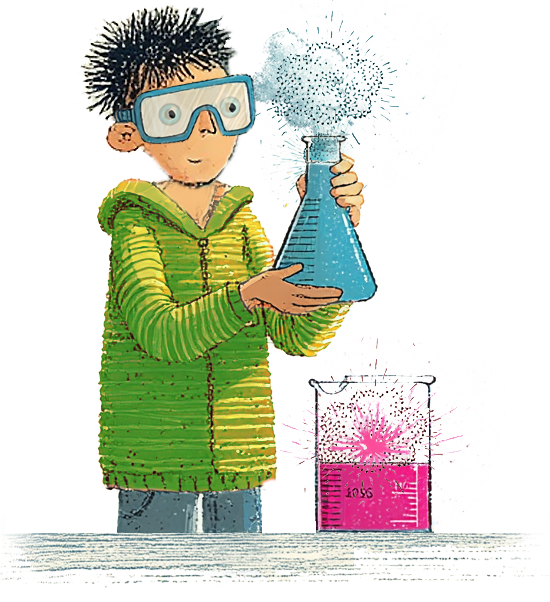
Pride
Excerpt Setting: Oregon Museum of Science & Industry (Portland, OR, 1963-68)
This excerpt was taken from my childhood, spanning five years because that was the number of times I entered a project in the local science fair, beginning as a seven-year-old in second grade. It should not be surprising that my life-long love for math and science drew me to the spectacle and it was certainly an emotional rollercoaster of highs and lows. For example, as a not-so-brilliant fourth grader, I created a toothpaste that included chocolate among the key ingredients, with the hypothesis that kids would be more likely to brush longer if it tasted good, although I failed to realize that chocolate would be counterproductive to fighting tooth decay. Fortunately, I ‘upped my game’ the following year, ultimately enjoying one of the PROUDEST moments of my life. Enjoy!
Sample #2
Ch. 43 (A TURD in THE PICKLE JAR) – And the OMSI is Awarded To[1]
My love for science was strong, and it was so exciting when the grade-school I was attending, announced that all of our students would be participating in the inaugural Northwest Science Fair sponsored by the Oregon Museum of Science and Industry (OMSI) located adjacent to the city’s zoo in the expansive Washington Park in southwest Portland. OMSI was originally founded in 1944 with the mission of establishing a museum to reunite the thousands of artifacts stored off-site around the area and provide viewing for everyone to enjoy. It included a state-of-the-art planetarium and the progressive OMSI Board committed to promoting not only science that studied Natural History but also focused forward toward Industry, Technology and other Applied Sciences such as Medicine (OMSI, 2025).
I still recall working on those first science fair projects, with the biggest challenge focused on choosing a topic to investigate. Of course, the libraries and book stores were filled with books and articles on projects that others had done in the past, but that didn’t suit me, as I wanted to do original work, not just copy someone else’s. Finally, I chose to study ‘Evaporation’ and ultimately arrived at two basic conclusions, first being that fresh water evaporated faster than salt water (and milk), because the particles dissolved in the salt water keep the water molecules from escaping into the air as quickly. In the second part of my experiment, I compared a narrow-mouthed jar filled with water to one that had a wide-mouth, demonstrating that the jar with the larger surface area exposed to air would evaporate quicker. It was very exciting writing up my project into my ‘LOG’ book, complete with an Introduction, Hypothesis, Procedure, Findings and Conclusion. Next, I made a display out of a cardboard box with corrugated paper glued to the sides and a poster board attached behind the props prominently displayed inside. For my efforts, I received a Silver Medal Certificate, signifying second place, behind first-place Gold Medal and ahead of third-place Red Medal. I was pleased with my performance until I watched the Gold Medalists honored at the all-school assembly and learned that they would progress to the (Douglas) County-wide science fair. Now I was feeling unsettled.
When I returned to school for third grade, I was really looking forward to the Science Fair again, and that year I ‘upped my game’ by investigating why some objects floated and others did not. I did a lot of research at the County Library and designed an elaborate experiment that demonstrated the scientific concept of ‘Density’ which is a measure of how heavy something is in liquid compared to its size, so if the object is denser than water it will sink when placed in water and if it is less dense than water, it will float. I also, added some clever variations on the theme, and eagerly awaited my award, but again, I received the Silver Medal, and it was ‘game over’ for another year.
In fourth grade, I was a year older and surely wiser so I decided to change direction and put on my inventor’s hat as I had the brilliant idea to create my own toothpaste, with the premise that kids would be willing to brush their teeth longer if they were given a good-tasting tooth paste rather than the bitter ones we all use. I developed several flavors, including chocolate, but in a taste test with volunteer subjects, I concluded that the cinnamon-flavor was the most popular. That year I went all out, borrowing Grandmother’s typewriter and submitted a typed LOG Book, complete with a clear-plastic folder. I also carefully traced the stenciled letters onto my display board, but this time I was awarded the Red Medal, reserved for ‘last-place losers’.
I was convinced the whole thing was rigged until Heather looked at my work and casually informed me that I got what I deserved. Before I could protest, others chimed in and reminded me that science involved discovery, so merely repeating someone else’s work to demonstrate the concepts of Evaporation or Density was not original and only worthy of second-place. Worse than that, my ‘Tooth-paste’ project was a total trainwreck because I didn’t even address the obvious issue of how a paste made from chocolate or cinnamon could have any value in preventing tooth decay, and deserved the ’big fat loser’ award. The truth can be brutal, but I did listen and developed even more resolve to do original work in the following year.
During the Winter of my fifth-grade year in 1967, I was a bit anxious trying to find a suitable topic when I looked at a project Heather had done years earlier, when she was participating as a grade-schooler. It involved ‘Optical Illusions’ and she had been awarded a Gold Medal at both the School and County Science Fairs, but failed to progress on to the State Finals at the OMSI facility in Portland, because of the ‘Orals Phase’ where the judges require the contestant to present the project to them and then respond to their questions accordingly. We both realized that she had made the same mistake that I had by not really drawing any novel conclusions from her project, so I decided to use this cool topic of Optical illusions but take a psycho-social approach with the scientific question, ‘Does Age or Grade Effect the Ability to Detect Optical Illusions?’ It was original and the judges loved it when I created a test with eight separate illustrations and then received permission to test each class in our grade school (grades 1-6) of 400+ students. The results were definitive and defensible that older children had better aptitude, likely due to their growing brains (i.e., cognitive development). This allowed me not only to earn a Gold Medal at both the school and county-wide fairs, but also advance past the orals-stage, to the State Finals in Portland. We couldn’t afford to make the journey to deliver my project to OMSI personally, so one of my friends who had also advanced, did so for me. A couple of days passed and I hadn’t heard anything until the following morning my parents suggested we make the 200-mile day-trip to Portland and see for ourselves how I had done. I was so excited but as we drove into the enormous city of Portland with skyscrapers and elevated freeways, I started getting anxious. We parked near the Portland Zoo as I ran into the museum and followed a maze of hallways to the back where a Gold Medal sat beside my science project.
In reflection, my parents had learned the day before that I had won but allowed me to experience the joy firsthand by making that long journey to Portland. I had never been so PROUD of any accomplishment in my life, which was even better not only because of the adversity I had faced in those previous three science fairs, but also the genuine joy that ALL of my family shared in this, and, yes, I did understand that it was a team effort. There was absolutely no jealousy from my siblings, as I can honestly say that we were raised to support each other fully and unconditionally.
Incidentally, OMSI sponsored an award ceremony designed for all of us Gold Medalists and our parents in a large banquet hall downtown on the Portland State University campus. I was thrilled to attend with mom and dad, and sat with two of my fifth-grade classmates who had also earned Gold Medals. We were called up to the stage, one-by-one, and awarded a heavy gold-colored statue which was a replica of the OMSI logo, and was referred to as an ‘OMSI’, much like Academy Award winners are presented with an ‘OSCAR’.
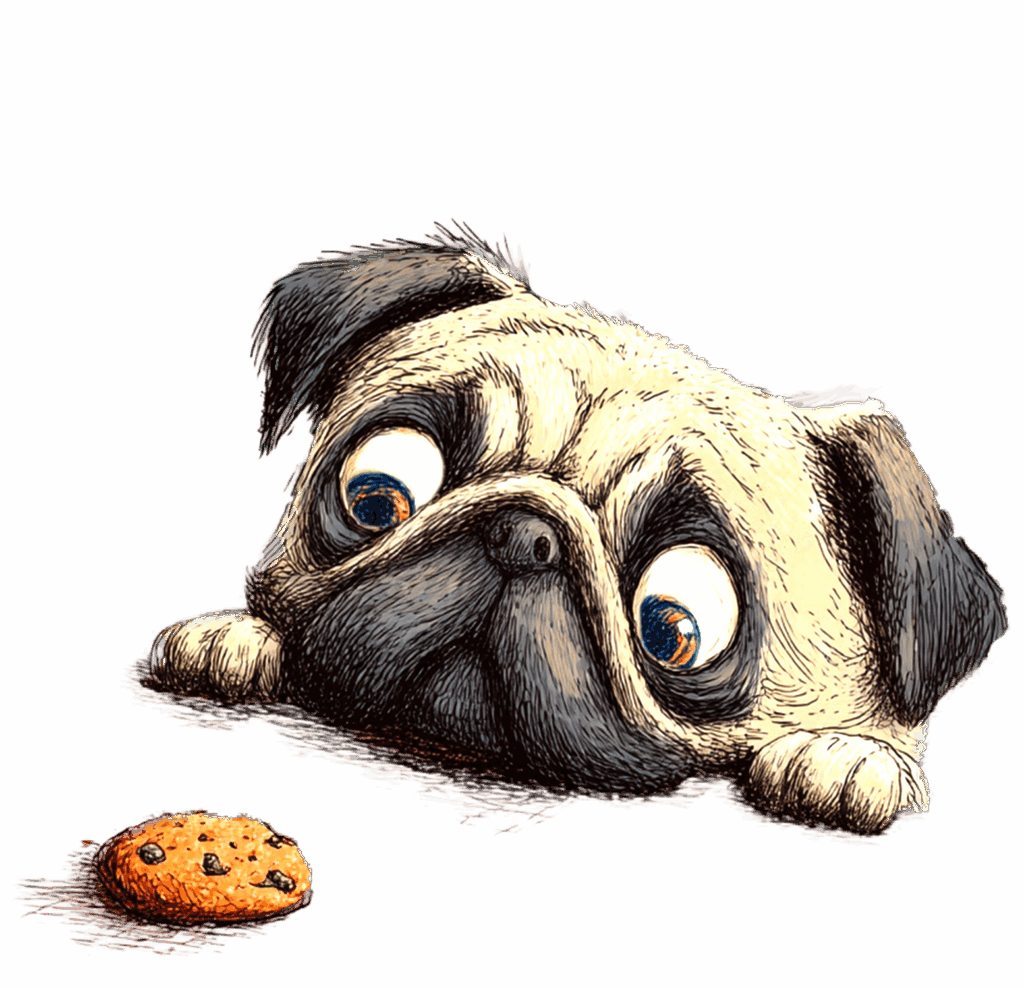
The following year, I entered the science fair as a sixth-grader as we were all required to do, and understood how fortunate I had been to have had this experience of a lifetime, so my expectations were not as lofty this time around. However, I chose to use a similar scientific approach, again creating illustrations to test all of the students at Fullerton IV grade school, only this time I was investigating ‘Short-term Memory’ instead of Optical Illusions with the scientific question, “Does Age or Grade Affect the Ability to Memorize Objects?’ I realize it appears to be a knock-off, but I was not only able to demonstrate strong correlation with age but also offer some of my own thoughts as to why. Again, the judges loved it and after another exhaustive journey, I won a second consecutive OMSI Award. I had anticipated that being honored again would be less exciting, but I was wrong, as I stood PROUDLY on the stage to accept the award. As well, I am proud to present a Cookie for Puppy Girl Award[2] to our science teacher, who tirelessly motivated us to compete in the science fair by making science fun, the sign of a truly gifted teacher.
__________
Oregon Museum of Science and Industry (OMSI) (2025) [Website]. OMSI [URL].
[1]Disclaimer: This excerpt and corresponding writing sample display some color but the actual book is in black and white.
[2] Inspired by and awarded to those special individuals who show kindness toward others without expecting anything in return. Note that this image uses color whereas the actual memoir is in black and white.
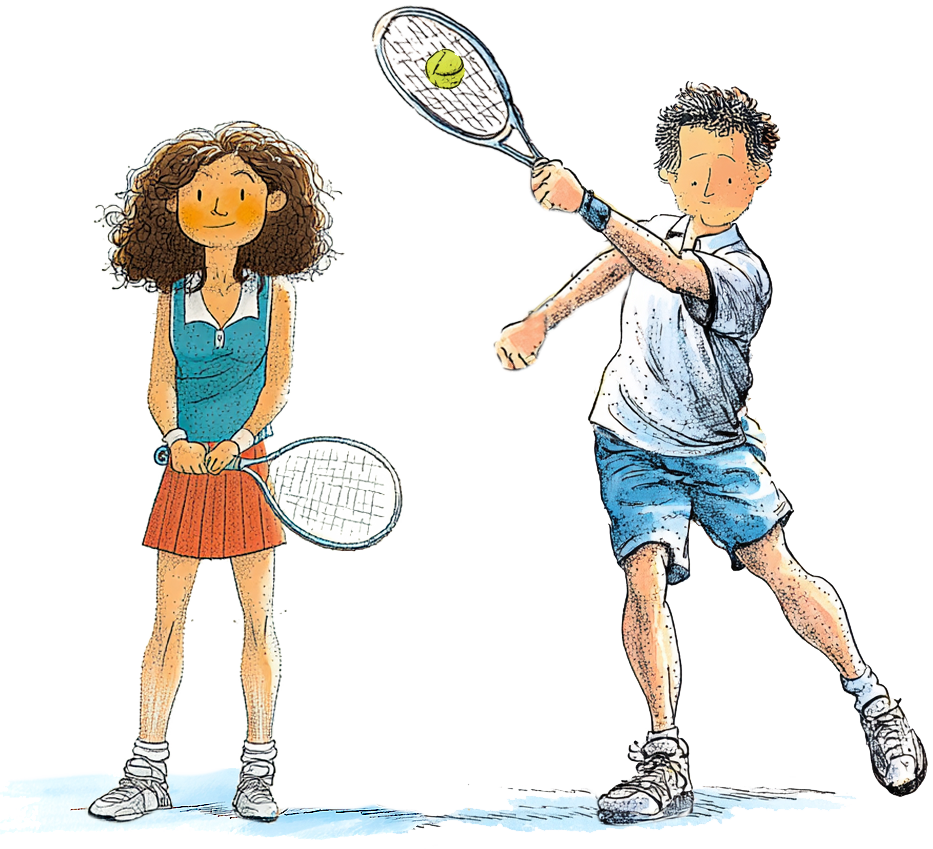
Pride
Excerpt Setting: Touring the Northwest (OR, WA, ID, & MT, 1980)
This excerpt was taken during the summer before my final year of graduate school at the University of Oregon (UO) as I was living in Eugene so I could work on my lab research project in support of my Master’s thesis as a condition to graduate and re-apply into medical school. My older sister and I had both had successful tennis careers earlier as each of us played #1 singles and doubles for UO in college but neither of us had competed in a couple of years due to other life priorities. In any case, we decided to enter a local tournament in mixed doubles (boy and girl teams) and it certainly led us on a very unexpected adventure over the course of the summer. Whereas, I am PROUD of some of my accomplishments, others, like having to play with second-degree burns on my butt from falling backward onto scalding hot rocks in a sauna not so much. Enjoy!
Sample #1
Ch. 23 (A TURD in THE PICKLE JAR) – Quick! Jump in the Water[1]
In the summer before my final year of graduate school (1980), I started playing tennis more frequently, at which point I suggested to my sister, Heather that we enter one of the larger tournaments held in Oregon in the ‘mixed doubles’ category i.e., teams composed of a guy and a girl) that was about to be competed in Eugene. We had played together often as a team for years in summer tournaments just for fun with decent success but I literally hadn’t touched a tennis racket in nearly two years, so I didn’t have high expectations for winning. Of note, each summer, the Pacific Northwest Tennis Association (PNTA) hosted a satellite tour where many of the top players on the West Coast joined in because the overall tour winner was presented with an entry into the U.S. Open, considered to be one of the top four professional tournaments in the world (i.e., collectively called the Grand Slam) and played in New York each September. The tour would progress each week, starting in Eugene, followed by Portland, Tacoma, Seattle, Vancouver, BC and concluding in Victoria. Of course, not all of these top players would compete in the Mixed Doubles event, often focusing on singles and possibly doubles, but nonetheless, the competition was top notch. We did compete, won several rounds and lost in the finals after a hard-fought match against a team from southern California. Needless to say, I wanted more, so that summer, we ended up playing tournaments in Eugene (OR), Portland (OR), Seattle (WA), Yakima (WA) and Olympia (WA). All that was left was for us to play in the PNTA’s season-ending tournament in Salem where the top players come together from the Pacific Northwest region, which included Oregon, Washington, Idaho, Montana, Alaska and British Columbia to help finalize the rankings for that calendar year of 1980.
Meanwhile, my friend Lance had been competing with a national rowing team that summer in Minnesota, with hopes of making the U.S. Olympic Rowing Team for 1980. He reached out and notified me that he had just begun his long drive back to Oregon. He would be arriving in Montana in a couple of days to stay with one of our fraternity brothers, Bradley, who now lived in that area, so I agreed to hop on a Greyhound bus and endure the twelve-hour ride so I could accompany him back to Portland. After the all-night bus journey, I arrived in Kalispel, a small resort town in northern Montana that offered world-class snow-skiing at the nearby Whitefish Resort and was nestled alongside Lake Flathead, an outdoorsman’s dream for boating and fishing. The three of us connected up to enjoy our one scheduled night in town before heading back on the road the following morning. We stopped for burgers and pints at the notorious Moose’s Saloon and then drove up to Whitefish for a firsthand look. I guess we interpreted it as a sign when we discovered that the pool and spa area were unattended to, probably because it was in the off-season and they were working with a skeleton crew. We stripped down to our briefs and for the next couple of hours, enjoyed the pool and spa until I made an unfortunate misstep while exiting the spa and my left buttocks fell backwards against the sizzling rocks and before I could regain my balance, I had suffered second-degree burns (i.e., damaging the outer epidermal layer and part of the underlying dermis). I was in some pain, but tried to shake it off so as not to ruin the evening, however, when I woke up the next morning, it was bad. The wound site was red and ‘raw-looking’ and had begun to ooze and we were all concerned about infection so we visited a clinic, at which time the doctor’s instructions were pretty clear, “Take the prescribed pain killer, apply the antibiotic ointment several times per day and rest”. I really don’t think the rest he was referring to included riding in an automobile for the next fourteen hours, sitting firmly on the wound, so we delayed our departure by one day and I did rest, but all that did was put us behind schedule.
In any case, we left for Oregon the following morning and I soon discovered that the crappy old Volks Wagon Van that we were driving home in would only go about 55 mph tops. In addition, a 27-foot-long racing scull was lashed to the roof which upset the balance of the vehicle and served as a wind foil while driving along the particularly windy Columbia River Gorge. To make matters worse, if that is even possible, we had to stop every couple of hours to change the dressing on the wound which would ooze through the bandage and then dry, prompting me to have to slowly rip the forming scabs in order to remove the bandage. What a ‘pain in the ass’ that was (literally) but, of course, I am saving the best part for last, I was still scheduled to compete in the season-ending PNTA sectional tennis tournament in Salem, located 650 excruciating miles away from Kalispel. Lance and I did finally arrive in Portland, two days later than planned, and the evening before Heather and I were planning to drive the 50-mile trip down to Salem for our first-round match. I had downplayed the injury so when she stopped by in the morning to pick me up, that confrontation did not go so well, as she emphatically stated that we needed to default, but no way was I going to agree to that, pleading, “Let’s just see how it goes, and we can always decide to default later”. So, off we went, and once the match started, I quickly realized that I was in over my head, because every time I would extend my leg or change direction abruptly, the scabs would tear and start to bleed. On top of that, it is worth noting that I have always competed in a very aggressive manner such that it would not be uncommon for me to dive, head-first, onto the cement surface of the tennis court and do a roll to regain my upright position. However, I can safely say that the first time I did dive was also the last as I almost blacked-out from the pain of rolling on the wound site.
In reflection, I am still amazed that I survived that self-inflicted disaster, but I am PROUD to state that we won all four of our matches over the next three days, including a close victory against the team that had been the defending champions for several years prior. For our efforts, we were awarded the #1 PNTA Mixed-Doubles ranking for 1980 and my wound did eventually heal six weeks later, without scarring. I probably should be most grateful to Bradley who had the good sense to scream, “Quick! Jump in to the Water” right after I was burned as, no doubt, the water cooled the wound site quickly and prevented even more damage to the area.
[1]Disclaimer: This excerpt and corresponding writing sample display some color but the actual book is in black and white.
Define Pride
A self-conscious emotion that occurs when a goal has been attained and one’s achievement has been recognized and approved by others. It differs from joy and happiness in that these emotions do not require the approval of others to be experienced. Pride also has expressive reactions that differ from joy, such as puffing up of the chest and directing attention to others or an audience. False pride can become grandiosity if the sense of accomplishment is not deserved or the reaction is excessive (American Psychological Association, n.d.).
American Psychological Association (n.d.). Pride. APA Dictionary of Psychology. Retrieved from https://dictionary.apa.org/pride.
Manage Pride
To effectively deal with pride, focus on cultivating humility and gratitude. This involves acknowledging your weaknesses, seeking feedback and recognizing your dependence on others. Practicing empathy, being open to learning from others, and actively listening can also help counteract prideful tendencies:
Acknowledge and Accept Your Weaknesses:
- Pride often stems from a fear of appearing imperfect. Recognizing your flaws and vulnerabilities is a crucial step towards humility;
- Don’t be afraid to ask for help when you need it. Seeking assistance is a sign of strength, not weakness;
- Be open to receiving constructive criticism and learn from your mistakes;
Practice Gratitude:
- Focus on the good things in your life and express gratitude for them. This shifts your perspective from self-centeredness to appreciation;
- Recognize the contributions of others to your successes and acknowledge their importance in your life;
Cultivate Humility:
- Humility is the opposite of pride. It involves recognizing your limitations and appreciating the value of others;
- Engage in activities that promote humility, such as serving others, practicing empathy and being mindful of your impact on those around you;
- Consider seeking guidance through prayer or meditation to help you develop a more-humble mindset;
Seek Feedback and Listen Actively:
- Actively seek feedback from trusted sources and be open to hearing what they have to say, even if it’s critical;
- Pay attention to what others are saying without interrupting or becoming defensive;
- Practice active listening by summarizing what you hear and asking clarifying questions;
Challenge Your Prideful Tendencies:
- Be mindful of situations where your pride might be triggered and consciously choose to respond with humility;
- Resist the urge to boast or compare yourself to others;
- Focus on your own personal growth and development, rather than seeking validation from external sources (Google, 2025);
Google (2025). AI Overviews [Generative AI Feature]. Managing pride. Retrieved from Managing Pride.
Note that this [URL] link is for a Google AI Overview so the actual content provided on line may differ slightly from the description that is printed above.